|
|
Qiang Ji
Professor |


![*]() About Me
About Me
Qiang Ji received his Ph.D degree in electrical engineering from the University of Washington. He is currently a Professor with the Department of Electrical, Computer, and Systems engineering at RPI. From January, 2009 to August, 2010, he served as a program director at the National Science Foundation, managing NSF's machine learning and computer vision programs. Prior to joining RPI in 2001, he was an assistant professor with Dept. of Computer Science, University of Nevada at Reno. He also held research and visiting positions with the Beckman Institute at University of Illinois at Urbana-Champaign, the Robotics Institute at Carnegie Mellon University, and the US Air Force Research Laboratory. Dr. Ji currently serves as the director of the Intelligent Systems Laboratory (ISL). Prof. Ji is a fellow of the IEEE and the IAPR.
![*]() Research Interests
Research Interests
Computer Vision, Probabilistic Graphical Models, Probabilistic Machine Learning, Affective Computing, Human Computer (Robot) Interaction, Intelligent Transportation, Robotics, and Information Fusion for Decision Making under uncertainty. For details on current research projects, click here
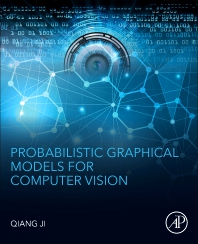
Book: Probabilistic Graphical Models for Computer Vision
![*]() Teaching
Teaching
ECSE 4850/6850
Introduction to Deep Learning
ECSE 6965: Advanced Topics in Probabilistic Deep Learning
ECSE 4961/6650 Computer Vision
ECSE 4810/6810 Introduction to Probabilistic Graphical Models
Research Projects
Human Centered Computer Vision
Probabilistic Machine Learning
Scene Graph Generation and Applications